Research Article - Der Pharma Chemica ( 2025) Volume 17, Issue 3
Design and Development of Natural Gum Microspheres for Antiviral Drug Delivery
Bhavana K*, Ekshitha* and Raj Kiran*Bhavana K, Department of Pharmaceutics, Sri Sivani College of Pharmacy, A ndhra Pradesh, India, Email: bhanu1001@gmail.com Ekshitha, Department of Pharmaceutics, Sri Sivani College of Pharmacy, A ndhra Pradesh, India, Email: bhanu1001@gmail.com Raj Kiran, Department of Pharmaceutics, Sri Sivani College of Pharmacy, A ndhra Pradesh, India, Email: bhanu1001@gmail.com
Received: 05-May-2025, Manuscript No. DPC-25-171482; Editor assigned: 08-May-2025, Pre QC No. DPC-25-171482 (PQ); Reviewed: 22-May-2025, QC No. DPC-25-171482; Revised: 01-Aug-2025, Manuscript No. DPC-25-171482 (R); Published: 28-Aug-2025, DOI: 10.4172/0975 413X.17.3.702-705
Abstract
New drug delivery technologies are revolutionizing the drug discovery, development and creating R&D focused pharmaceutical industries to increase the momentum of global advancements. In this view Novel Drug Delivery Systems (NDDS) have many benefits, which include improved therapy by increasing the efficacy and duration of drug activity, increased patient compliance through decreased dosing frequency and convenient routes of administration and improved site-specific delivery to reduce unwanted adverse effects.
Keywords
Drug discovery; Novel drug delivery systems; Patient compliance; Adverse effects
Introduction
Controlled drug delivery system
Controlled drug delivery is one which delivers the drug at a predetermined rate, locally or systemically, for a specified period of time. Continuous oral delivery of drugs at predictable and reproducible kinetics for predetermined period throughout the course of GIT. Recently, a new generation of pharmaceutical products, called controlled release drug delivery systems, such as those developed from the osmotic pressure activated drug delivery system, have recently received regulatory approval for marketing and their pharmaceutical superiority and clinical benefits over the sustained release and immediate release pharmaceutical products have been increased.
Microspheres can be defined as solid, approximately spherical particles ranging in size from 1 μm to 1000 μm. They are made of polymeric, waxy or other protective materials that are biodegradable synthetic polymers and modified natural products such as starches, gums, proteins, fats and waxes. The solvents used to dissolve the polymeric materials are chosen according to the polymer and drug solubility, process safety and economic considerations. Microspheres are small and have large surface-to-volume ratio. At the lower end of their size, they have colloidal properties. The interfacial properties of microspheres are extremely important, often including their activity [1].
The potential use of microspheres in pharmaceutical industry are:
• The conversion of oils and other liquids to solids for ease of handling
• Taste and odour masking
• Improvement of flow properties of powders
• Improve the solubility of water insoluble substances by adding in dispersion of such material in aqueous media
• Production of sustained, controlled release and targeted medications.
K Prakash, et al., prepared and characterized Lamivudine microcapsules using various cellulose polymers by solvent evaporation technique. The prepared microcapsules were characterized for the percent drug content, entrapment efficacy FTIR, DSC, Scanning Electron Microscopy (SEM) and in vitro dissolution studies. J Josephine LJ, et al., formulated and evaluated floating microspheres of stavudine as a model drug for prolongation of gastric retention time for oral delivery by emulsion solvent diffusion using Eudragit RS 100 as a rate controlling polymer. Parul K Patel, et al., prepared and characterized gum acacia microspheres by single step emulsion in-situ polymer crosslinking method using Gluteraldehyde (GL) as the crosslinking agent and Hydrochloric Acid (HCl) as the catalyst. Patil PB, et al., prepared and evaluated mucoadhesive microspheres of atenolol and propranolol by solvent diffusion and an interpolymer complexation Poly Acrylic Acid (PAA) with Polyvinyl Pyrrolidone (PVP) to increase gastric residence time. Abdur Rouf Al Mamun Md, et al., have developed glipizide microspheres with natural gums using guar gum and xanthan gum by orifice ionic gelation technique and they were characterized by scanning electron microscopy and particle size analysis. Kesari Asha, et al., formulated and evaluated Zidovudine loaded chitosan microspheres by emulsification method using gluteraldehyde as crosslinking agent. The prepared microspheres were characterized for FTIR, X-ray powder diffractometry and scanning electron microscopy.
Materials and Methods
Microspheres were prepared by using different ratios of drug: Natural gum (1:1.15, 1:1.20, 1:1.25). Gums were allowed to hydrate in 20 ml water for 3 hrs. The weighed quantity of drug (100 mg) was dispersed in 10 ml of methylene chloride and add the aqueous solution of gum. The above drug-gum dispersion was acidulated with 0.5 ml of concentrated sulphuric acid to give a clear viscous solution. The resultant solution was emulsified into the oily phase by pouring it into 200 ml of paraffin liquid containing 0.5% w/w span 80 as an emulsifying agent. Stirred mechanically at 1800 rpm for 210 min using a stirrer and heated by a hot plate at 50°C. 1.2% w/v dichloromethane was added as encapsulating agent and 0.15% w/v of gluteraldehyde as crosslinking agent, stirring and heating were maintained for 2.5 hrs until the aqueous phase was completely removed by evaporation. The oil was decanted and collected microspheres were washed with water to remove surfactant residue and three times with 100 ml aliquots of n-hexane, filtered through whatman filter paper, dried in an oven at 80â°C for 2 hrs to collect discrete, solid, free free-flowing microspheres and stored in a desiccator at room temperature (Table 1).
| Formulation | Drug (mg) | Xanthan gum (mg) | Guar gum (mg) | Liquid paraffin(ml) | Span 80 (v/v) |
| F1 | 100 | 15 | - | 200 | 0.5 |
| F2 | 100 | 20 | - | 200 | 0.5 |
| F3 | 100 | 25 | - | 200 | 0.5 |
| F4 | 100 | 30 | - | 200 | 0.5 |
| F5 | 100 | - | 15 | 200 | 0.5 |
| F6 | 100 | - | 20 | 200 | 0.5 |
| F7 | 100 | - | 25 | 200 | 0.5 |
| F8 | 100 | - | 30 | 200 | 0.5 |
| F9 | 100 | - | 35 | 200 | 0.5 |
Table 1: Formulation trails (F1-F9) are designed by using different concentrations of xanthan gum and guar gum.
Results and Discussion
Pre-formulation studies
Solubility analysis: The Lamivudine is freely soluble in water; sparingly soluble in methanol; practically insoluble in acetone. It was soluble in 0.1 N HCL (pH 1.2) and phosphate buffer (pH 6.8). Solubility analysis is important because the drug has to dissolve in the solvents and also in the dissolution medium used) [2,3].
Melting point determination: The melting point of the obtained drug sample was found to be 161°C which is within the reported range of 160- 162â??. It complies with the purity of the drug sample.
Determination of λmax in 0.1 N HCl (pH 1.2) and phosphate buffer (pH 6.8): Lamivudine was dissolved in 0.1 N HCL (pH 1.2) and phosphate buffer (pH 6.8), further diluted with the same and scanned for maximum absorbance in UV double beam spectrophotometer (shimadzu 1800) in the range from 200 to 400 nm, using pH 1.2 and pH 6.8 as blank. The λmax of drug was 400 nm, using pH 1.2 and pH 6.8 as blank. The λmax of drug was found to be 272 nm.
IR Spectroscopy: The FT-IR spectrum of the Lamivudine pure drug was found to be similar to the standard spectrum of Lamivudine as in I.P. The individual FT-IR spectra of the pure drug Lamivudine, as well as the combination spectra of the drug and polymers are shown in the Figures 1-4. All the characteristic of peaks of lamivudine were present in spectrum of drug and polymers, indicating compatibility between drug and polymers [4].
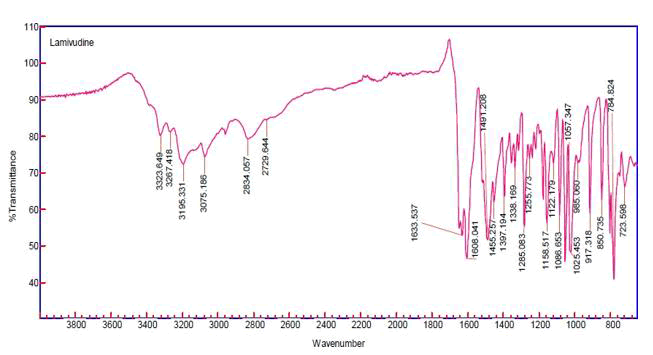
Figure 1: IR spectrum of pure drug lamivudine.
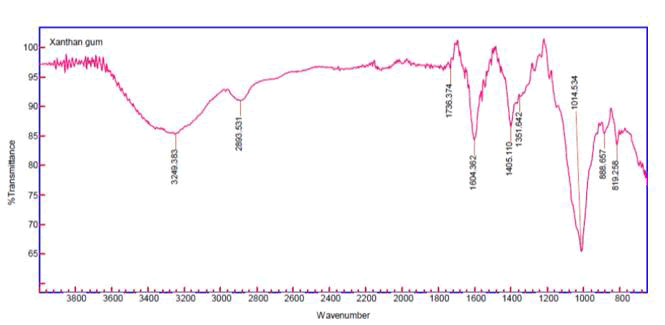
Figure 2: IR spectrum of pure xanthum gum.
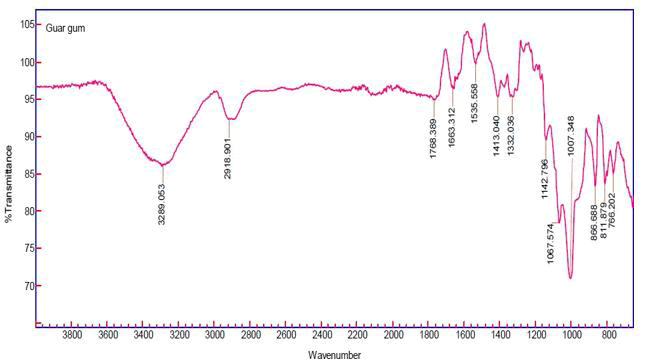
Figure 3: IR spectrum of pure guar gum.
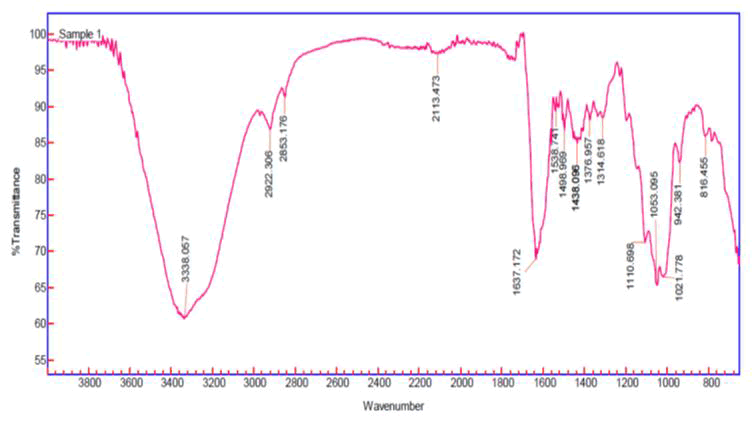
Figure 4: IR spectrum of pure drug lamivudine with xanthum gum and guar gum.
Micromeritic properties: The results of all formulations F1 to F9 of Lamivudine microsphere are shown in Table 3, which were evaluated for variable parameters such as bulk density, tapped density, % compressibility index, Hausner’s ratio and angle of repose. The % compressibility index was in the range of 11-18 for all the formulations F1 to F9 indicating good flow property. The values of angle of repose for formulations F1, F2, F5 and F6 was found to be in the range of 25-30 which indicated the good flow potential (Table 2) [5].
| Formulation code | Bulk density (g/cm3) | Tapped density (g/cm3) | Compressibility index (%) | Hausner's ratio | Angle of repose () |
| F1 | 0.4426 ± 0.005 | 0.5126 ± 0.009 | 13.65 ± 1.21 | 1.158 ± 0.02 | 26.93 ± 0.23 |
| F2 | 0.4986 ± 0.008 | 0.5814 ± 0.004 | 14.24 ± 1.32 | 1.166 ± 0.05 | 25.74 ± 0.24 |
| F3 | 0.5234 ± 0.015 | 0.6243 ± 0.008 | 16.16 ± 1.27 | 1.193 ± 0.011 | 32.94 ± 0.17 |
| F4 | 0.4813 ± 0.009 | 0.5446 ± 0.005 | 11.94 ± 1.34 | 1.131 ± 0.019 | 33.81 ± 0.14 |
| F5 | 0.5418 ± 0.013 | 0.6183 ± 0.001 | 12.36 ± 1.04 | 1.141 ± 0.02 | 28.67 ± 0.36 |
| F6 | 0.6168 ± 0.011 | 0.7136 ± 0.012 | 13.56 ± 1.02 | 1.156 ± 0.08 | 27.08 ± 0.16 |
| F7 | 0.4576 ± 0.014 | 0.5228 ± 0.008 | 12.47 ± 1.21 | 1.142 ± 0.03 | 33.61 ± 0.64 |
| F8 | 0.4754 ± 0.013 | 0.5845 ± 0.011 | 15.24 ± 1.03 | 1.229 ± 0.023 | 34.54 ± 1.07 |
| F9 | 0.5438 ± 0.016 | 0.6432 ± 0.014 | 15.45 ± 0.84 | 1.183 ± 0.026 | 37.12 ± 1.51 |
Table 2: Micrometric properties of lamivudine.
The results obtained from in-vitro drug release were plotted adopting five different mathematical models of data treatment as follows shown in Table 3.
• % Cum drug release Vs. time (zero order rate kinetics)
• Log % cum drug retained Vs. time (first order rate kinetics)
• % cum drug release was plotted against √T (root time)
• Log % cum drug release Vs. log time (Peppas exponential equation)
• Hixson-crowell’s erosion equation, (% Cum. drug retained)1/3 Vs. time
| Mathematical models (Kinetics) | |||||||
| Formulation code | Korsmeyer-Peppas | Higuchi | Hixson-crowell | First order | Zero order | Best fit model | |
| R2 | n | R2 | R2 | R2 | R2 | ||
| F1 | 0.9405 | 0.4596 | 0.9633 | 0.9668 | 0.8892 | 0.9893 | Zero order |
| F2 | 0.9352 | 0.448 | 0.9687 | 0.9636 | 0.8979 | 0.9834 | Zero order |
| F3 | 0.9239 | 0.4408 | 0.9499 | 0.9308 | 0.8678 | 0.9552 | Zero order |
| F4 | 0.943 | 0.4374 | 0.9748 | 0.9731 | 0.9084 | 0.9914 | Zero order |
| F5 | 0.9466 | 0.4574 | 0.9748 | 0.9686 | 0.9103 | 0.9868 | Zero order |
| F6 | 0.9349 | 0.4231 | 0.9618 | 0.9422 | 0.8874 | 0.9636 | Zero order |
| F7 | 0.967 | 0.446 | 0.9908 | 0.9899 | 0.9304 | 0.9961 | Zero order |
| F8 | 0.972 | 0.4192 | 0.9885 | 0.9868 | 0.9479 | 0.9942 | Zero order |
| F9 | 0.9676 | 0.4358 | 0.9855 | 0.9809 | 0.9471 | 0.9896 | Zero order |
Table 3: Kinetic modeling data of drug release profiles (F1-F9) fitted to different mathematical models, indicating correlation coefficients (R²), release exponent (n) and best fit model.
Conclusions
• The present study reports a novel attempt to formulate microspheres of the Lamivudine by using natural gums like xanthan gum and guar gum as carrier for better treatment of HIV and chronic hepatitis B. Microspheres of lamivudine were prepared by solvent evaporation method. Various evaluation parameters were assessed, with a view to obtain controlled release of lamivudine
• FTIR study indicated that the drug is compatible with all the excipients
• Natural gums like xanthan gum and guar gum can be used to formulate microspheres
• Micromeritic studies revealed that the mean particle size of the prepared microspheres was within the range of 278 ± 7.14 to 991 ± 10.73 μm
• The overall curve fitting into various mathematical models was found to be on an average. The formulations F1 to F9 were best fitted to zero order kinetic model and the drug release from the formulation was by non-Fickian diffusion mechanism
References
- Sharma P, Chawla A, Arora S, Pawar P. J Advan Pharmaceu Technol Res. 2012; 3(3): p. 147-159.
[Crossref] [Google Scholar] [PubMed]
- Parveen A, Syed IA. Int J Pharmaceu Sci Drug Res. 2014; 6(2): p. 102-108.
- Chavda Y, Bhimani B, Patel G, et al. IJPRBS. 2013; 2(3): p. 89-106.
- Patel PK, Pandya SS. Res Rev J Pharm Pharm Sci. 2013; 2: p. 40-48.
- Jani GK, Shah DP, Prajapati VD, et al. Asian J Pharm Sci. 2009; 4(5): p. 309-323.
- Krishna LN, Kulkarni PK, Dixit M, et al. IJDFR. 2011; 2(6): p. 54-71.