Research Article - Der Pharma Chemica ( 2025) Volume 17, Issue 3
Insilico Design and Docking Studies of 4-Hydroxy Benzoic Acid and Amino Acid Hybrid Compound as an Analgesic and Anti-Inflammatory Agent
Yogeshri J. Jibhkate1, Sushil S. Burle1, Milind J. Umekar1, Radheshyam T. Lohiya* and Atul T. Hemke2Department of Pharmaceutical Chemistry, S.K.B. College of Pharmacy, Gada, Kamptee, Maharashtra, India
Radheshyam T. Lohiya, Department of Pharmaceutical Chemistry, Smt. Kishoritai Bhoyar College of Pharmacy, Kamptee, Nagpur (MS), India, Email: rtlohiya@gmail.com
Received: 14-Aug-2025, Manuscript No. DPC-25-169883; Editor assigned: 18-Aug-2025, Pre QC No. DPC-25-169883 (PQ); Reviewed: 01-Sep-2025, QC No. DPC-25-169883; Revised: 01-Oct-2025, Manuscript No. DPC-25-169883 (R); Published: 28-Oct-2025, DOI: 10.4172/0975-413X.17.3.715-720
Abstract
Inflammation plays an important part in the pathophysiology of many chronic diseases and is crucial for the host's defenses against injury and infectious microorganisms. Inflammation, composed of several cellular and microvascular reactions that remove injured tissue and regenerate new tissue, is the main mechanism for tissue repair after an injury. This study involved the construction of a hybrid 4-hydroxybenzoic acid amino acid and peptide counterpart. All of the compound's structures were represented using Chem. Office 10. All molecules were docked using autodock 4.2 to the crystal structure of the catalytic domain of TACE with inhibitor, which has PDB ID 2I47, in order to better understand how ligands, interact with different receptors. The substances RLYJ-1 and RLYJ-3 score extremely well when measured against the reference chemical substances and have good physicochemical qualities, according to an evaluation of ADME properties using Swiss ADME. A Pro Tox website was used to do insilico prediction of LD50 values in rats after oral delivery. Furthermore, the synthesis and evaluation of anti-inflammatory and analgesic properties are necessary to demonstrate that these compounds are efficacious against inflammation as predicted by computer aided drug design.
Keywords
4-Hydroxy Benzoic Acid; ADME; Anti-inflammatory
Introduction
The word "inflammation “or "the inflammatory process" is used in medicine; the inflammatory process has been one of the most actively researched topics of experimental medicine since the early nineteenth century. The dynamic process of inflammation is part of the immune system's reaction to injury and infection. As represented in Figure 1, the three sub-phases of the inflammatory phase are acute, subacute and chronic (or proliferative). It is the body's chemical way of telling the immune system to repair and refit damaged tissue as well as defend itself from foreign invaders like viruses and bacteria (Figures 1 and 2) [1].
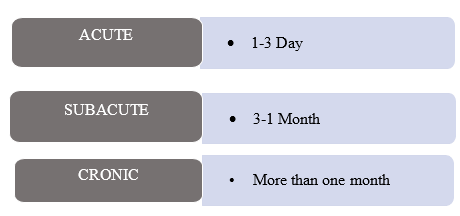
Figure 1: Phases of inflammation.
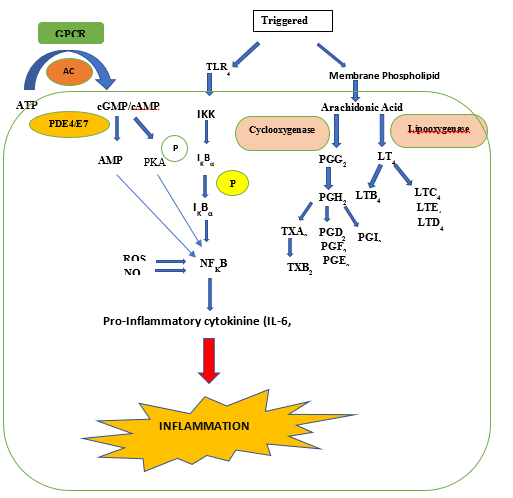
Figure 2: Pathways for inflammation.
The black arrow represents stimulation, whereas the red dotted arrow represents suppression. GPCR stands for G-protein coupled receptor, AC stands for adenyl cyclase, ATP stands for adenosine triphosphate and cAMP/cGMP stands for cyclic adenosine/guanosine monophase. Cancer, autoimmune conditions and inflammatory diseases can all be brought on by NF-kB signaling dysregulation. The IL-1 family of inflammatory cytokines, of which IL-1b is the main inflammatory cytokine, is produced at the beginning of the immune response. IL-1b influences both monocyte migration to the site of inflammation and interactions between immune cells and nerve cells. IL-6, like IL-1b, is an endogenous pyrogen that promotes fever and the creation of acute phase proteins in the liver. Immune cells are also drawn to the site of inflammation by IL-6. TNF-capacity as to induce the necrosis of tumour cells was its initial mechanism of action. Pathogens and their by-products drive the inflammatory response by activating pro-inflammatory genes via transcriptional regulation. This causes large amounts of inflammatory mediators, Reactive Nitrogen Species (RNS) and Reactive Oxygen Species (ROS) to be released, damaging microvascular endothelial cells, increasing endothelial blockage porousness and causing tissue injury. When Phospholipase A2 (PA2) is activated, the alternative process starts by breaking down membrane phospholipids to arachidonic acid. COX-1, COX-2 and LOX employ arachidonic acid to produce prostaglandins, thromboxanes and leukotrienes. The cyclooxygenases COX-1 and COX-2 convert arginine to PGH2. Additional processing is influenced by the enzymes found in each cell type. PGH2 cycling to the various prostaglandin H2 isomerizations in the cell then produces the intentional terminal prostaglandins. The produced prostaglandins perform a variety of functions. However, three prostaglandins are known to be proinflammatory: Prostaglandin E2 (PGE2), prostaglandin D2 (PGD2) and prostaglandin F2a (PGF2a). Vasodilation and vascular perviousness are caused by PGD2 and PGF2a. PGE2, however, is mostly necessary for its functions in swelling. PGF synthases influence PGF2a development in the uterus. Mast cells include PGD synthase, which produces PGD2, a critical modulator of Th2 responses. Nearly entirely tissue cells have PGE synthase and are capable of producing PGE2, an eicosanoid that promotes inflammation, increases vascular permeability, promotes ageing and produces seditious pain. The antiinflammatory PGI2 is produced by endothelial cells (prostacyclin). TXA2 is primarily produced by platelets through thromboxane synthase. TXA2, a prominent platelet activator, increases the development of thrombi. A more thorough knowledge of medication interactions at the molecular level is urgently needed as the situation changes [2]. Since the majority of medications have side effects, drug designs should be made to have less adverse effects than currently available medications. Computational approaches have been created recently and are useful tools in the pharmaceutical industry's search for novel drugs. These techniques are straight forward and inexpensive and they race the creation of powerful, new molecules with the appropriate biological activity. A logical method of drug design known as docking predicts the composition and binding free energy of a ligand-receptor combination. One of the most used computational tools used in structure-based drug design. Docking helps determine how ligands interact with amino acid residues in target binding pockets and predicts the ligand's binding affinity. Docking information is utilized for two distinct purposes: first, it predicts ideal binding geometries for a small molecule in a target protein's binding site and second, it calculates the binding free energy of the resulting complex, a process known as scoring. The chemical compound 4-hydroxybenzene carboxylic acid, with the empirical formula C7H6O3, molecular weight 138.13 and melting point 216.2°C, is known as hydroxy benzoic acid 30.4-hydroxy benzoic acid is said to have antibacterial (against Gramme +ve and Gramme -ve bacteria), antifungal, antialgal, antimutagenic, antisickling and estrogenic properties. It's also commonly used as a preservative in medicines, cosmetics, pharmaceuticals, food and beverages. It is also used as a trapping agent in study on the production of hydroxyl radicals during brain ischemia and reperfusion [3].
4-hydroxy benzoic acid
4-hydroxybenzoic acid, commonly known as p-Hydroxybenzoic Acid (PHBA), is a monohydroxybenzoic acid and a phenolic derivative of benzoic acid. It is a white crystalline solid that is only minimally soluble in water and chloroform but more soluble in polar organic solvents such as alcohol and acetone. The phenolic metabolites known as Hydroxybenzoic Acid Derivatives (HBAs) typically have a C6-C1 structure. C6-C2 acids (phenylacetic acids) are rare minor dietary additional elements. HBA's basic structure is modified by hydroxylations and methoxylations of the aromatic ring. Vanillic acid, protocatechuic acid, syringic acid and p-hydroxybenzoic acid are four commonly occurring acids (Table 1) (Figure 3) [4].
| Property | Description / Value |
| IUPAC name | 4-Hydroxy benzoic acid |
| Chemical class | Acid |
| Molecular formula | C7H6O3 |
| Molar mass | 138.12 g mol-1 |
| solubility | Water and chloroform are both slightly soluble. In polar organic solvents, it is more soluble. |
| Density | 1.46 g/cm3 |
| Melting point | 213â??-217â?? |
| Appearance | White crystalline solid |
| Acidity pKa | 4.58 |
| Log P | 1.58 |
Table 1: Physicochemical properties of P-hydroxy benzoic acid.
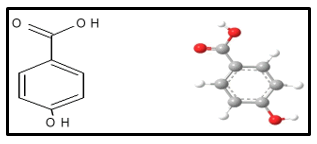
Figure 3: 4-hydroxy benzoic acid.
Chemistry-SAR of 4-hydroxy benzoic acid
Hydroxy (-OH group) group present on the benzoic acid ring then increases the pharmacological action. -OH, group present on benzoic acid then increase the Antibacterial, antifungal, antialgal, antimutagenic, ant sickling and estrogenic activities. If the Ester group (R-COOR) is present on 4- hydroxy benzoic acid i.e., parabens then increases the anti-microbial activity. E.g., methyl ester, ethyl ester, propyl ester, butyl ester. By the binding of the hydroxy group present on the 2nd and 4th position of benzoic acid, the benzoic acid derivative is formed. ex-orsellinic acid. the binding of the methoxy group present on the 3rd and 5th position of the benzoic acid derivative gives syringic acid which has antioxidant, anticancer, antibacterial and antiviral activity.
Methyl group (-CH3) present on the 6th position of dihydroxy benzoic acid and Orsellinic Acid are formed. The Methoxy (-CH3) group present in the 3rd position of 4-hydroxy benzoic acid gives vanillic acid compound. Vanillic acid gives anti-oxidant, anti-inflammatory, immunostimulating, neuroprotective, hepatoprotective, cardioprotective and antiapoptotic activity. The mixture of compounds that had hydroxy groups at the third, fourth and fifth positions of benzoic acid produced gallic acid. The use of the medicine gallic acid in the treatment of inflammatory allergic illnesses such as asthma, allergic rhinitis and sinusitis is crucial for human health. Hydroxy (-OH) group present on 2nd and 5th position of benzoic acid i.e., gentisic acid is established. Gentisic Acid is used as an anti-inflammatory, anti-genotoxic, hepatoprotective, neuroprotective and antibacterial property in particular antioxidant activity. 3, 4-dihydroxybenzoic acid is a chemical derivative of p-hydroxybenzoic acid and protocatechuic acid is formed. Procatechuic acid shares structural similarities with the antioxidant compounds gallic acid, caffeic acid, vanillic acid and syringic acid. Protocatechuic acid (3,4-dihydroxybenzoic acid) has anti-cancer, anti-aging, anti-ulcer, anti-fibrotic, anti-viral and antibacterial properties. Methoxy (-OCH3) group present in the 3rd and 5th position gives Anti-Sickling activity. Some spices and plants are also rather high in different HBAs. Protocatechuic acid is the most abundant HBA in cinnamon bark after hydrolysis with salicylic and syringic acids [5-7].
Materials and Methods
Hardware and software
Docking research was conducted utilizing an HP intel core 2 duo E8300 CPU running at 2.83 GHz, 1 GB of RAM, 32-bit Windows Vista, Auto dock 4.2 and a 1TB hard drive. Energy minimization was carried out while designing each structure in Chem office (version 3.5). Swiss ADME was utilized for ADME predication [8].
Receptor and enzymes
The co-crystallized structure of TACE target protein's catalytic domain was discovered in the Protein Data Bank (PDB) database of the RSCSB, with PDB ID 2I47. Unwanted chains, water molecules and a set of receptors are removed during this alteration and the protein ligand complex's energy consumption is thus minimized.
Ligand preparation
Chem office10.0 was used to create the suggested 4-hydroxy benzoic acid hybrid amino acid and peptide molecules. Their energy minimization was done in order to identify low energy conformers and the results were recorded in the mol 2 file format. These compounds were entered into the auto dock 4.2 project table and ligand preparation was performed using the application option and exported in the SDF format. These molecules were then loaded into the docking library of the Auto dock 4.2 docking software and docked. In this study, all compounds were examined for tautomeric energy and stereochemistry [9].
Validation of docking protocol
The reference ligand was taken out of the active area of the receptor 2I47 and re-docked for docking validation. The conformation and orientation of the protein were then compared to the original X-ray crystallographic structure obtained from Protein Data Bank (PDB). The RMSD value was less than 1.90 A0. This suggests that the docking technique utilized can accurately mimic conformation. It was applied to the docking of the hybrid 4- hydroxybenzoic acid amino and peptide [10].
Molecular docking
The structures of different conformations of the medication and the targeted receptor protein (2I47) were loaded into the Autodock 4.2. All of the agonist’s ligands were prepared using the autodock 4.2 application option, loaded as the docking library and subsequently by performing docking and assessing the interactions, binding affinities and their score, the optimal pose was generated and both 2D and 3D views were produced and preserved [11].
Results and Discussion
Chemical work
General procedure: CHAITANYA Groups, BAJAJ HINDUSTAN SUGAR company, V.A. B enterprises, PARTH industries, MERK Millipore and ELAM Pharma India supplied all chemicals. The solvents were reagent grade and were filtered and dried according to normal procedures. Reactions were thin-layer chromatography (TLC) on silica gel plates was used to monitor the results. The spots were observed in iodine vapours or under UV light at 254/365 nM in an appropriate UV chamber (Z-Glass, India).
4-hydroxy benzoic acid: 4-hydroxy benzoic acid is purchased from the vishal chem of 99% assay purity. All the chemicals used were of laboratory grade and manufactured by Central Drug House or E. Merck. The purity of the compounds was determined using melting point, thin layer chromatography with silica gel G as an adsorbent and n-butanol: Acetic acid: Water (4:1:1) and chloroform: Methanol (3:1) as solvent systems. Infrared spectroscopy (using the KBr pellet method), mass and other spectral characterization of the synthesized compounds were also done.
Synthesis of peptides
All the chemicals used were of laboratory grade and manufactured by Vishalchem. The compounds' purity was determined using melting point, thin layer chromatography with silica gel G as an adsorbent and n-butanol: Acetic acid: Water (4:1:1) and chloroform: Methanol (3:1) as solvent systems. The synthesized compounds were also subjected to infrared spectroscopy (through the KBr pellet method), mass analysis and other spectrum characterization [12].
The peptide synthesis method can be divided into four steps:
• Preparation of chlorophosphate ester
• Protection of amino groups of amino acids e.g. glycine, leucine
• Condensation of phthaloyl-protected amino acid and another amino acid for dipeptides for tripeptides one more amino acid is condensed
• Deprotection of amino groups
Linear peptides
Following steps are followed for the synthesis of linear peptides:
• Protection of amino group by phthalic anhydride
• Condensation with chlorophosphate ester
• Addition of another amino acid
• Deprotection
Cyclic peptides
The following steps are followed for the synthesis of cyclic peptides:
• Protection of amino group by phthalic anhydride
• Condensation with Chlorophosphate ester
• Addition of another amino acid
• Conversion into ethyl ester
• Deprotection of amino group
• Hydrazide formation with hydrazine hydrate
• Diazotization of peptide hydrazine to peptide azide cyclization in dilute basic condition at low temperature.
Carboxyl protecting group:
The carboxyl group must be protected for three reasons:
• To enhance the solubility of the peptide in organic solvents
• To avoid anhydride formation in the presence of activated amino acids
• To allow unambiguous activation in the presence of a coupling reagent (only the unprotected carboxyl group can be activated)
• Most of the commonly used groups are based on alkyl esters, with methyl and ethyl esters providing the most straightforward examples.
Deprotection of these is achieved by treatment with sodium hydroxide in an alcoholic solvent. The use of benzyl or substituted benzyl esters allows for deprotection with a strong acid (HBr/Acetic acid or by catalytic hydrogenolysis) (Table 2).
| S.No | Name | Abbreviation | Typical cleavage agent |
| 1 | 2-Oxymethylene anthraquinone esters | Maq | Pd, TFA |
| 2 | Carboxamido methyl ester | CAM | NaOH/Na2CO3 |
| 3 | P-chlorobenzyl ester | CBz | Bu4NF.3H2O in THF |
Table 2: Carboxyl protecting groups.
Amino group protection
The preservation of the amino group is the first step in all peptide production processes. The protection step is required to avoid the contact of two amino acid molecules (Table 3).
| S.No | Name | Abbreviation | Typical cleavage agent |
| 1 | Phthaloyl | Pth | NH2NH2 |
| 2 | Benzoxy carbonyl | Z | H2Pd, ACOH, HF |
| 3 | t-Butyl carbonyl | BOC | HCl, ACOH |
| 4 | Trityl | Trt | ACOH, H, Pd |
| 5 | Fluotenyl methoxy carbonyl | FMOC | NaOH |
Table 3: Amino protecting group.
Activation
Activation of carboxy group: Activation i.e., attachment of the leaving group to the carboxy component's acyl carbon to allow attack by another amino acids amino terminal. This is achieved with electrophilic reagent i.e., by converting it into acid chloride ester (viz. methyl, benzyl or p-nitro benzyl) or mix anhydride [14,15].
Conclusion
The virtual computational method of drug design is crucial for the development of new drug compounds in contemporary drug research. The insilico approach of drug design is useful for the synthesis of new compounds and the early bioactivity prediction of those compounds. According to this investigation, the hybrid molecule outperforms the straight forward 4-hydroxy benzoic acid in terms of docking score. Chem Office 10. And Chemdraw 12.0 was used to design the 4-hydroxy benzoic acid analog using different amino acids and peptides. Docking of all the designed analogs was performed using auto dock software version 1.5.7 on the selected receptor 2I47. The affinity of the binding site between Ligand and Protein was investigated using the discovery studio software. Insilico designing was carried out using Autodock 1.5.7. The molecular modeling and docking studies revealed that amongst the compounds RLYJ-1, RLYJ-2, RLYJ-5, RLYJ-7, RLYJ-10 and RLYJ-16 show much better docking scores compared to standard on COX-2 receptor (PDB ID-2I47). The compound RLYJ-1 having a Docking score of -12.29 and the compound RLYJ-5 having a docking score of -12.05 shows significant docking scores compared to standard Diclofenac sodium having docking score of -13.00 The 4-Hydroxy benzoic Acid analogue was tested pharmacologically for anti-inflammatory, analgesic and antioxidant properties. The effect of the synthesized compound on carrageenan-induced rats is represented in. For screening purposes, Diclofenac Sodium was utilized as a standard for anti- Inflammatory activity. Hence, we conclude from the statistical analysis that RLYJ-1 and RLYJ-5 showed significant activity. The Analgesic activity of the Synthesised compound was predicted by using PASS Software. However, the hybrid compounds RLYJ-1, RLYJ-2, RLYJ-5, RLYJ-7, RLYJ-10 and RLYJ-16 show good analgesic stimulant, opioid dependency treatment, opioid kappa 3 receptor antagonist and anti-inflammatory Activity by PASS Prediction which may be consider for analgesic activity studies on animal models. Spectral studies like Ultra Violet Spectroscopy (UVS) were performed for A DPPH Scavenging Inhibition for antioxidant activity. Ascorbic Acid was used as a benchmark for anti-oxidant activity in the screening process. Compounds were tested for possible anti-oxidant activity by using the UV Spectroscopy method. Almost all higher docking score containing synthesized compounds shows anti-oxidant activity when compared with standard.
Acknowledgement
The authors would like to express their gratitude to the University Department of Pharmaceutical Chemistry, Smt. Kishoritai Bhoyar College of Pharmacy, Kamptee, Rastrasanth Tukadoji Maharaj Nagpur University for providing research facilities.
Conflict of Interest
The authors declare that there is no conflict of interest.
References
- Schmid-Schonbein GW. Annu Rev Biomed Eng. 2006; 8(1): p. 93-151. [Crossref] [Google Scholar] [PubMed]
- Nathan C. Nature. 2002; 420(6917): p. 846-852. [Crossref] [Google Scholar] [PubMed]
- Medzhitov R. Nature. 2008; 454(7203): p. 428-435. [Crossref] [Google Scholar] [PubMed]
- Neha K, Wakode S. Eur J Med Chem. 2021; 221: p. 113493. [Crossref] [Google Scholar] [PubMed]
- Botting RM. J Therm Biol. 2006; 31(1-2): p. 208-219. [Crossref] [Google Scholar] [PubMed]
- Husain A, Khan MSY, Hasan SM, Alam MM. Eur J Med Chem. 2005; 40(12): p. 1394-1404. [Crossref] [Google Scholar] [PubMed]
- Akhter M, Husain A, Azad B, Ajmal M. Eur J Med Chem. 2009; 44(6): p. 2372-2378. [Crossref] [Google Scholar] [PubMed]
- Kulkarni R, Achaiah G, Narahari Sastry G. Curr Pharm Des. 2006; 12(19): p. 2437-2454. [Crossref] [Google Scholar] [PubMed]
- White M. J Allergy Clin Immunol. 1999; 103(3): p. S378-S381. [Crossref] [Google Scholar] [PubMed]
- Rankin JA. AACN Clin Issues Adv Pract Acute Crit Care. 2004; 15(1): p. 3-17. [Crossref] [Google Scholar] [PubMed]
- Sherwood ER, Toliver-Kinsky T. Best Pract Res Clin Anaesthesiol. 2004; 18(3): p. 385-405. [Crossref] [Google Scholar] [PubMed]
- Ahmed AU. Front Biol. 2011; 6(4): p. 274. [Crossref] [Google Scholar] [PubMed]
- Rao YJ, Xi L. Acta Pharmacol Sin. 2009; 30(1): p. 1–24. [Crossref] [Google Scholar] [PubMed]
- Parmeggiani F, Romano MR, Costagliola C, et al. Mediators Inflamm. 2012; 2012: p. 1-16. [Crossref] [Google Scholar] [PubMed]
- Ahluwalia J, Udkoff J, Waldman A, et al. Drugs. 2017; 77(13): p. 1389-1397. [Crossref] [Google Scholar] [PubMed]